in private beta · join the waitlist
Your team.
Your agents.
Your plans.
One room.
Your team joins a project like a Figma file. Everyone brings their own agent, on their own plan. GitHub still holds the code — Kyouryoku holds the room around it.
Takes a minute. One email when there's a room to open.
the room, panel by panel
This is the room, today.
Six screens from the private beta, in the order you meet them.
01 · Join
Bring the clone you already have.
Open an invite, approve your device once, and the room recognises your GitHub checkout and binds it.
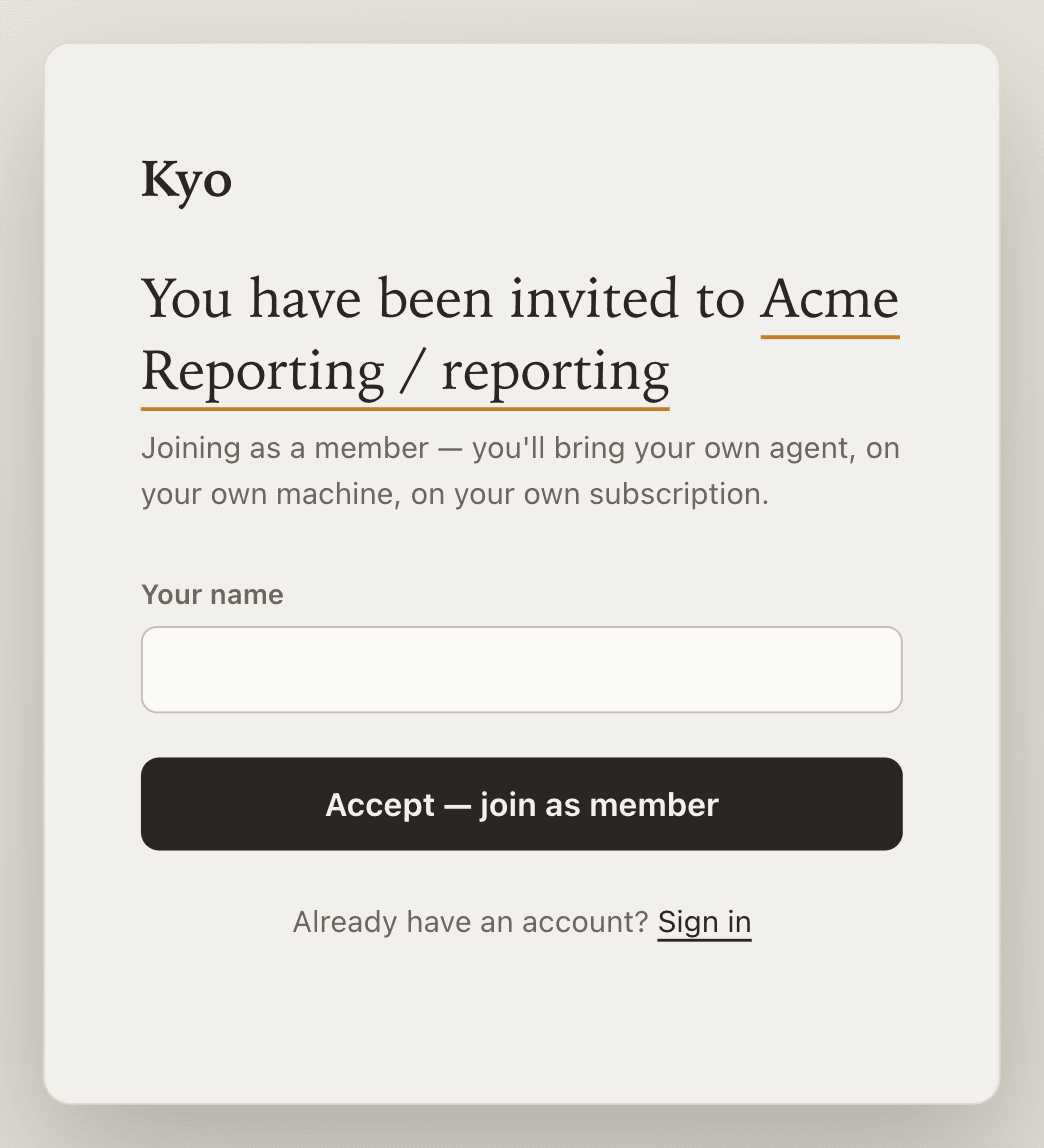
The invite names the workspace and project.
02 · Presence
See who is working.
Signed-in teammates, the devices they have connected, and the agent sessions running now — each with its branch.
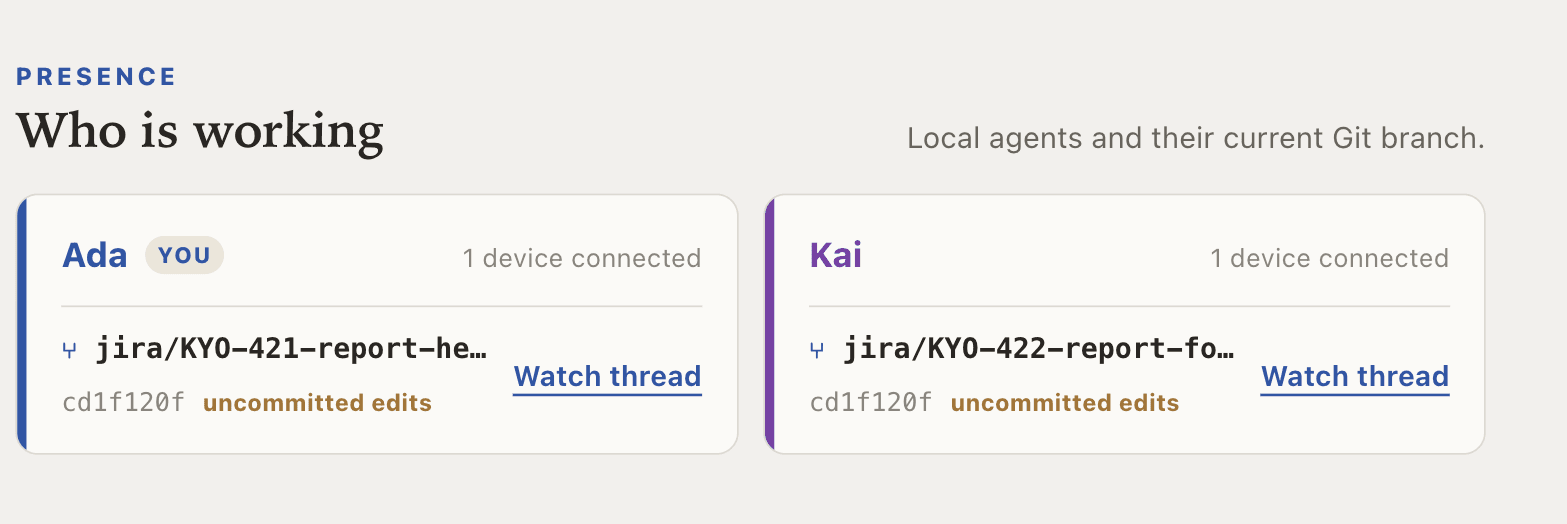
Two members, live from their own clones.
03 · Watch and steer
Read a live thread. Add a line.
Open a teammate's running agent and follow it as it happens. Your note reaches their session at its next turn, attributed to you.
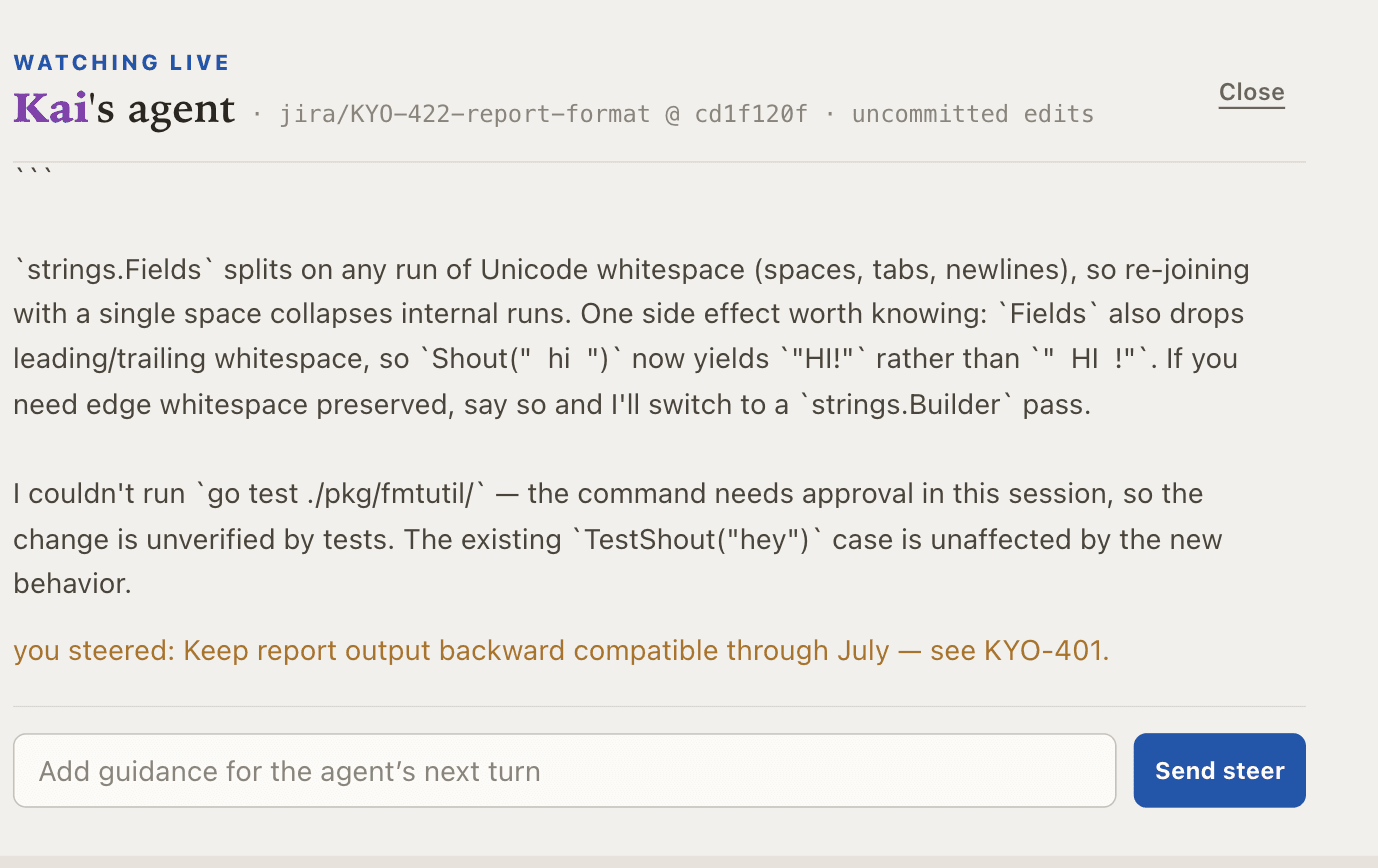
A steer, attributed, waiting for the next turn.
04 · Paths crossed
Know when you are in the same file.
When two live sessions touch one path, the room tells both people and names it. Awareness, not a merge verdict.
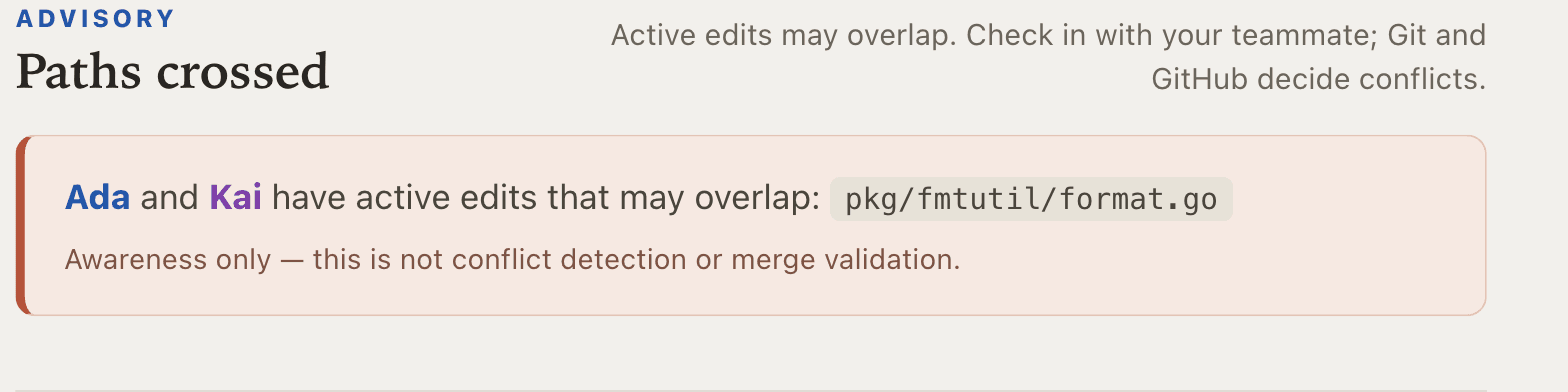
Advisory only — it names both people and the path.
05 · Hand off
Hand off the work, not the branch.
Pass on the context, the outcome you want, and what is in the way. Instructions only — no branch or commit moves through the room.
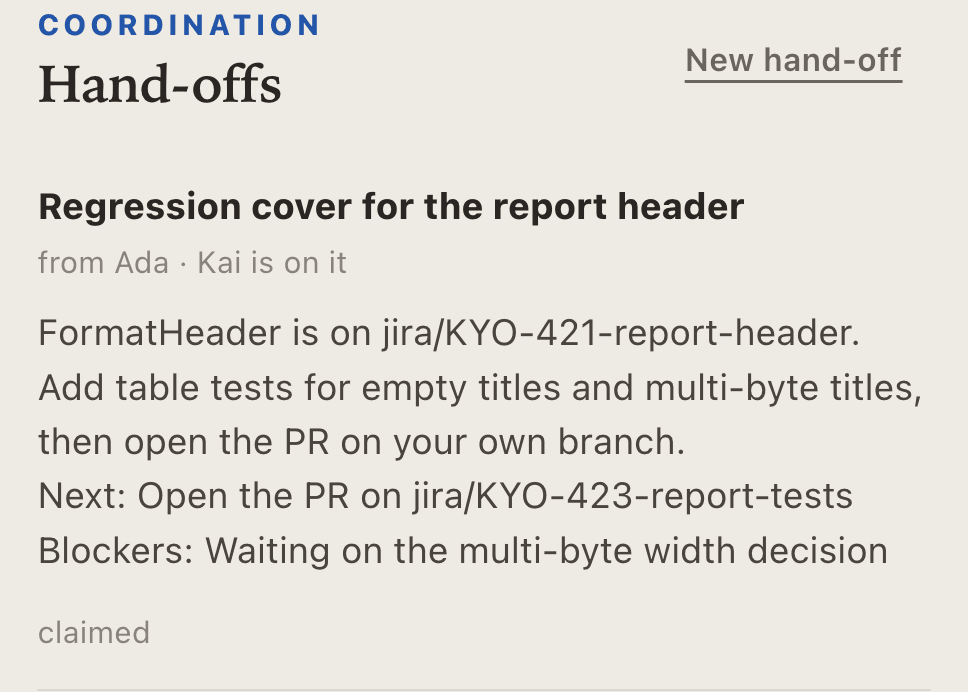
A hand-off carries instructions, and someone claims it.
06 · Memory
The room keeps its own minutes.
Decisions, conventions, status and blockers are stored with who recorded them, and answers come back from those facts.
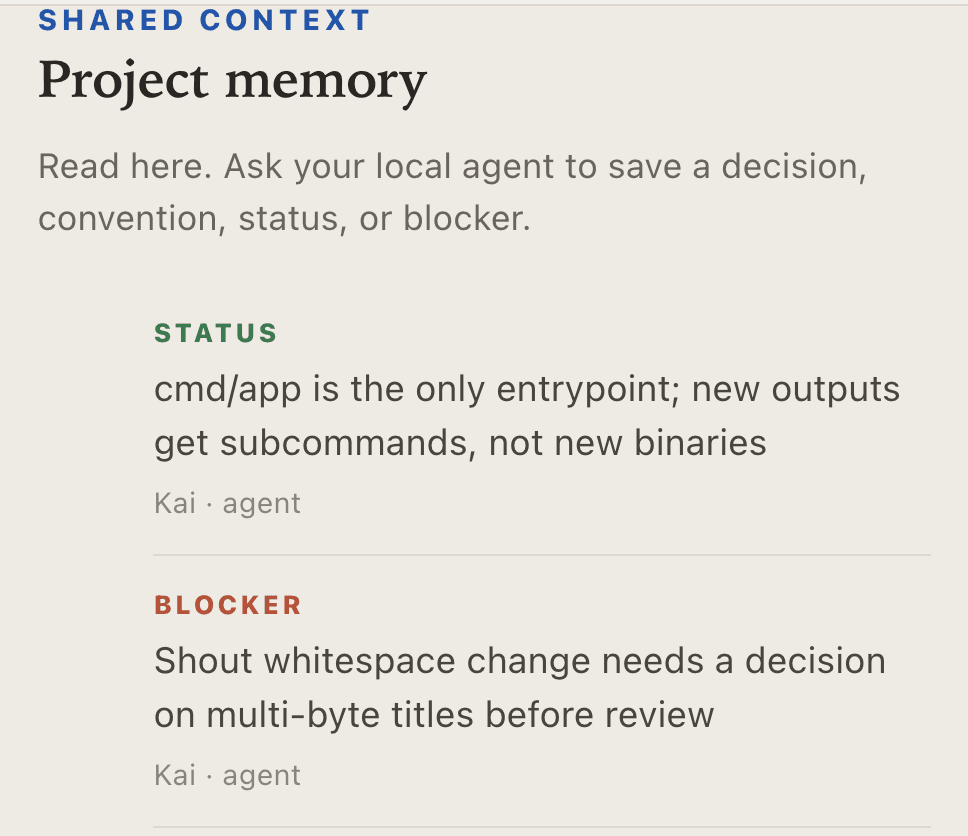
Every fact carries who recorded it.
The invite names the workspace and project.
how it works
One room. Your agent on your machine.
Three parts. GitHub holds the code; Kyouryoku holds the live room around it — it never runs your model and never sees your keys.
The space
A shared project you join by link. Presence, live agent threads you can watch, and a steer that reaches a teammate's running session at its next turn.
The edge
Your agent runs on your machine, on your plan. Kyouryoku coordinates the room; it never runs the model.
The codebase
GitHub stays the authority. You branch, commit and open pull requests as you do today — the room only warns when two live sessions touch one path.
| layer | in Kyouryoku |
|---|---|
| Where you type | Your editor, your agent's UI — unchanged. |
| Where the model runs | Your machine, your plan. Kyouryoku never holds your credentials. |
| Where edits land | Your own clone, your own branch. Commits and pull requests go through GitHub, not Kyouryoku. |
| Who sees it | Everyone in the room, live — presence, threads, edits, advisories. |
Kyouryoku never holds your credentials — your agent runs on your machine, on your plan.
connect your agent
Bring the agent you already use.
Claude Code
Connect once and your sessions appear in the room live — thread, edits, and the branch you are on. The agent itself never leaves your machine.
Your GitHub flow
You branch, commit, review and merge exactly as you do now. Kyouryoku never pushes, comments, reviews or merges for you.
Cursor, Devin
Claude Code is the agent the room reads today. Tell us which one you use and we'll prioritize it.
Stand in the room for ninety seconds.
Leave your email at the door.
Register and see your place in line. Three questions about how your team works, then a time with the founders if you want one.